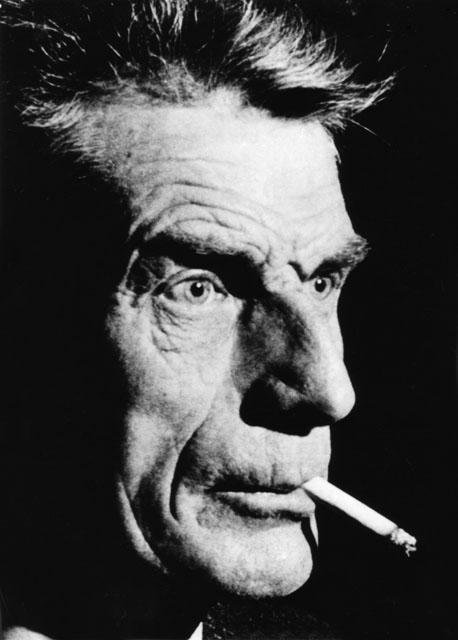
I was reading the Guardian debate on black theatre and even if it was too local for my case (I can’t really relate to British theatre) and lacked an intersectional perspective, it gave me some food for thought.
Roy Williams affirms the healthy state of black theatre in Britain, where there are different voices exploring what it means to be black in Britain. To the universalist claims that there is no black theatre because “Theatre is theatre. Nobody talks about "white theatre" when they go to see a David Hare play”, Williams responds in a meaningful way: “But then they don't need to. From box-office staff to administrators, from performers to directors, theatre is owned and controlled by white people. Anyone who isn't white is marginalised.”
The whole idea of promoting black theatre in Britain is based on the ideas “we need it to ensure we are heard” and also “"Theatre" sounds po-faced and white; "black theatre" sounds intriguing, daring”.
Tokenism is addressed in his article on these terms: “Black writers have to write about whatever they want. Write about race. Don't write about race. Just make sure your play challenges you as much as you hope it will challenge your audience. But if that audience seems more interested in defining you as a black person, rather than listening to your work, walk away. Those people are looking backwards and will take you backwards, if you let them.”
Michael McMillan writes another article on black theatre where he addresses also the importance of naming the black theatre: “ And eventually we would have heard about young writers such as Bola Agbaje and Michael Bhim, for example, irrespective of whether they're black or white – they're just talented and skilled new voices. Yet somehow the label of race seems to stick. Given our recent history, perhaps that's little surprise. Djanet, a character in Afrika Solo by the black Canadian playwright Djanet Sears, tells us in the very first words of the play: "You know, nothing exists until a white man find it." Thus it was claimed for many years that no theatre existed in Africa before Europeans arrived, even though black music, dance and humour have been intrinsic to the development of modern western entertainment.”
This argument makes me wonder how the Westerness/whiteness/patriarchy/heterosexism of theatre, music and entertainment become invisible on the way to the spectator and how artists are reproducing or challenging the colonial/imperial/dominant culture in various contexts. Because ignoring these genealogies certainly reproduce the conservatism of many artistic environments.
Pam Spaulding writes on her blog about some weird situtions in the soap opera industry. First, Chris Engel, an actor from The Young and the Restless, quitted the series after he realized that his character was about to kiss another man.
Now there is another similar case: Patricia Mauceri plays the mother of a character that turns out gay in One Live to Live. She refused the script because a Latina mother can never accept that, in her opinion. She was changed with another actress.
"OLTL" was taping scenes in late-June concerning roommates Cristian, Layla and Fish. (They'll air in September.) Cristian and Layla suspect that sweet cop Fish is gay, but aren't sure how to approach him about it. So they buy a book about how to tell if you're gay and plan to give it to him.
Cristian's mom, Carlotta, was supposed to find the book and assume Cristian is gay. Her reaction was scripted to be very accepting and even amused, citing his love of art and fondness for going shirtless as signs she should have recognized.
But Mauceri, who has played diner purveyor Carlotta Vega for 14 years, refused to play the story as written, saying a Latina mother would not be so accepting. Rather, Mauceri rewrote the scenes to make Carlotta confused and troubled, and submitted them to "OLTL" execs.
"That's not the story we're telling," responded an exec.
Mauceri then said she could not play the scenes as written, so the show called Santiago.
"Saundra Santiago is now playing Carlotta Vega," confirms an ABC rep.
The stereotype that all Latino mothers are homophobic is used in this case to promote a very personal and direct form of homophobia. Some actors afford to refuse the part or re-write the script. That brings to my mind the situation in theatre, the one that I know better. A couple of weeks ago, Iulia Popovici was mentioning how Romanian actors are avoiding to identify with their gay characters, almost yelling "this is not who I am!". I see that quite often when a gay character comes on stage. Quite bizarre, this detachment is not happening with criminals, murderers, rapists, bigots etc. Playing evil is more convincing most of the times. Does it mean that playing queer is seen as being more threatening to most heterosexual actors? Or is it the fear of their own sexuality, the fear of becoming one of them by rehearsing? It is a good example to show how performance has implications on subjectivity just like performativity does. Actors fear that and they try to keep the character as far as possible from their subject. Then you come with some black-face type of performances, ridiculing the queer character, in the style of Bruno (Sacha Baron Cohen was most of the time close to his wife during premieres, even if in character: he needed the proof that he IS not Bruno, he is not queer, that is just a character to make fun of of). Directors are doing it in a similar way: they dis-identify with their queer characters and stories by some poor form of Brechtian alienation. The purpose is not to make the audience think about their own situation or to make them critical of what they see: theatremakers are just telling that it is not their story, it is not their alliance, it is not their concern and creativity, queerness is incidental and it's "used" mainly for its comical homophobic effect. That is the situation if the queer character is not part of a melodramatic plot and is killed at some point to reinstall the original status quo. Then it becomes a tool for a queer cleansing of the stage. Both situations are dead ends for any social change and reinforce a homophobic attitude.
A perfect example of how false is the image of the innocent artist. The persons that were trafficking were professional stage artists, they really had a performance to do in Budapest:
MUMBAI: In yet another case of human trafficking, 18 passengers were arrested at Mumbai airport for trying to board a flight and travel to Budapest illegally on Saturday afternoon. The passengers, all of whom hail from Kerala, were intercepted at the immigration counter before they could board a Thai Airways' Mumbai-Istanbul-Budapest flight. They are currently in police custody. Last week, two Air India staffers were arrested for human trafficking. "These passengers were travelling on genuine visas, which were obtained from the Hungarian consulate in New Delhi,'' said a police official. "However, they had furnished incorrect documents claiming that they were stage artistes going to perform in Budapest,'' he added. This is the second time in the past five months that such a large number of passengers, travelling together on forged documents, have been arrested at the airport. Officials said eight passengers were stage artistes and acting as carriers for the 10 others. There were six women in the group. "The rest, who were feigning to be artistes, said they wanted to procure jobs in Budapest,'' senior inspector Dilip Patil said. "The artistes were to perform on March 31,'' he added.
Mona Chirila, my professor of stage directing from Cluj, started a project at the local puppet theatre Puck. It is an adult social-political theatre, with an emphasis on feminism and Balkan women for 2009 performances. Tonight they have a new premiere with a play by Visniec that she directed: "The woman like a battlefield". It might look like a small project but considering the limited representations of conscious political performances in Romania, it can bring only admiration for the simple fact that it exists. I hope that it lives long and that I can be more of an active help for it.
In 1949, Brook was the director of productions at the Opera House, Covent Garden. From this privileged position, he started to work on Richard Strauss' Salome, with Oscar Wilde's libretto. He picked as stage designer a controversial figure at that time, Salvador Dali. Brook went to Spain not to work with Dali on a set, but on a "hallucinatory fantasy".
Before the production opening, Brook was writing: "Strauss' music is the hallucination-producing drug which induces the same emotional reaction as the highly stylised, artificial, rhetorical and elaborate visual imagery of Wilde's original... The task of the producer and designer is to find the same approach in "theatre style" which Wilde supplies in his dialogue."
Brook connected to Dali plagiaristically, he returned to London with an amazing portfolio. He remembers awkwardly Gala running after him to get a receipt for it. He did not understand why was she afraid of plagiarism or unauthorised sales. I guess seeing them working together was enough to understand the hysterical identification of Brook with Dali's ideas.
But the story is not over: on his way back, Brook experienced what his biographer, Michael Kustow, calls "an encounter that might have figured in a Dali nightmare." Brook was held and robbed in a forest by what the English press called "Spanish bandits" (some underground Republican militias), armed with rifles, machine guns and grenades. They took the car and all their belongings. Brook asked them if he can keep Dali's drawings in exchange of his silk pyjamas. The bandits tied everyone up and threw the designs at Brook's feet.
"I was as close to death a young life being extinguished as one could think - I know that I was terrified. But ten minutes later, I was only aware of the comic side of it" remembers Brook. His identification with Dali's work went so further that it denied the materiality of his own life, the only material connection to reality was given by the Salome drawings.
But the real attack came in London, where critics were unmerciful with Salome: one of them, Ernest Newman, wrote "Of the production in general, it is difficult to speak in the restrained language appropriate to a Sunday paper. One absurdity followed fast on the heels of another..."
Brook wrote an answer to his virulent critics containing "The critics all decided that Dali and I were only out to annoy them. There, at least, I might claim that they underestimated us; if that have been our intention I think that between us we might have done much worse..." This "us" reminds me a lot of Freud-Fliess connection and the long letters about another "us".
The first result was that Brook lost his job, his contract as Director of Productions at Covent Garden was not renewed in 1950. Musical Opinion's comment is remarkable: "his meteoric rise to such an exalted post at the age of twenty-seven was an artistic mistake on the part of authorities who should have had more respect for tradition than to permit it to be the plaything of a young experimentalist. "
Image: I, Not I by Micky Donnelly, oil on canvas, 2006 Last week I went to Cluj for an amazing conference called "Action Research and Feminism." There were two presentations that I gave, one of them being connected to my staging of Beckett's Not I, part of Silent as the Grave show. Here is what I had to say:
In Not I from 1972, a woman's mouth is isolated on the stage, locked in place with the rest of her face and body shrouded in darkness. She is identified only as "Mouth." Through a torrential stream of monologue, we discover that the woman – nearing seventy years of age, possibly even dying – has remained silent most of her life, since being thrust prematurely into the world. Her sudden flood of language is a manifestation of the "buzzing" in her head, an almost involuntary act, an autobiographical stream of babelogue with the "half the vowels wrong." Significantly, she refuses to adopt the first-person pronoun, insisting on referring to the subject of her story as "she". Like many of Beckett's characters, Mouth's hysterical need for acting out, keep talking defers the act of self-identification, the awareness of "I" that denotes accountability among the ruins of a fallen world.
Whereas Krapp's taping is accumulative and entirely self-focussed, Mouth is continually revising her narrative, the perfect or ideal form of which would omit her altogether. When her "vehement refusal to relinquish third person" suffers from a moment of confusion, she cries out, "no! . . she! . ."
Mouth becomes invested with an almost hallucinatory sense of intensity and carnality; her flickering movements the living synecdoche for an absent body. The longer we watch (and listen to) Mouth talk, laugh, and scream, the more we perceive other bodily elements as well, from the opening of the eye to the clenching of the fist. Like ghostly overtones to live music, these almost subliminal transformations arise from the interplay of material and instrument, and in Not I Beckett achieves a remarkable collusion of speech and form. Mouth is intimately connected to the words spewing forth: her very contours and motions subordinated to the demands of articulation, she provides a physical embodiment of language. To fall silent – to shut, to close up – would seem a kind of suicide, further underlining that Beckettian compulsion to break the silence with a constant stream of language, despite the futility of communicating anything meaningful.
Performing the part of Mouth is a real challenge: besides having to deliver a winding monologue whose pacing is everything, the actress must endure the physical discomfort of being literally locked in place, including a head restraint, so that only her mouth remains always visible. Body on stage becomes present through absence of the whole body, we can see and hear only the mouth. Actress’s absent body expresses lively concreteness and escapes becoming a “representable object… for the abstractive gaze” of the spectator. Hugh Kenner has suggested that Beckett may be recalling one of the unusual conditions to the license granted to Ireland's Abbey Theatre in 1904: besides being prohibited from staging exhibitions of wild beasts, the managers were not "to allow women or children to be hung from the flies or fixed in positions from which they cannot release themselves." When the play premiered in New York, Jessica Tandy was puzzled and asked Beckett whether the woman had been raped in the field. Beckett was startled: "How could you think of such a thing!" There is no need to invent external incidents to justify, as it were, Mouth's dilemma. Existence is trauma enough, and a narrative can be a consolation only in the form of disappointment.
The too many contrasting views on Beckett, on the effect and functioning of his plays in theatrical contexts, were provoked also by two burning issues that he explores in what he calls the “stage texts”: spectatorial gaze and gender issues. His plays and their theatrical interpretations still generate heated debates, especially on the grounds of their poststructuralist complexity and their feminist potential. Beckett raised difficult questions about gender relations, social conditions and dilemmas facing women, disability, age, affectivity and lack of affectivity. He never provided any answers, he didn’t give any hints how spectators should live their lives. He did not proposed political actions, policies or social measures. But these plays have a potential to inspire social change and to challenge us nowadays. Beckett’s plays bring new perspectives to feminist issues today and present contrasting views on inequality.
Adrienne Rich used the concept of re-vision to symbolize the act of looking back at old texts from new critical directions by raising fresh questions. According to her, re-vision is for feminists “more than a chapter in cultural history: it is an act of survival.” Through re-vision we can look at Beckett’s texts for a way to broaden horizons, rewrite, reinterpret, criticize and restage them. Many interpretations of Beckett are put on stage everyday but Beckett’s potential is still to be rediscovered. By using the easiest strategy to relate to his characters, stage situations and his clichés nowadays we just rely on the values that we already agreed on. Each time a superficial canonized staging of Beckett is done by well-meaning actors, directors and producers another nail is hammered into his theatrical coffin. That won’t be problematic if these performances won’t overshadow outstanding elements in his plays and a strong critical voice. By seeing Beckett as a tool for social change an uncomfortable question has to be asked: is Beckett actually the finest tool for questioning inequality and patriarchy? Or would it be better to leave this task to human rights organizations, the UN, academics or feminists? Can we actually revision his characters as relevant mouthpieces for feminist slogans? Re-vision contributes to feminist epistemologies and critique of surrounding inequality; it offers a confirmation that the world around us can be changed. Re-visioning Beckett offers new types of subjectivities and new theoretical frameworks. According to Rich, re-vision is an inevitably collective action and can establish new frameworks in understanding reality.
The Mouth is not only a simple I, because she is directly and intimately related to her being as she, alongside other women into this world. There is a continuum in a not-I-but-she-centered vision of the world: her subjectivity is attached to other women. Following Braidotti and contrary to Lacan, her ex-centricity vis-à-vis the system of representation points to another logic, another way of making sense: the-she-in-I is not silent, she is part of a symbolic referential system by and of women. She is not stepping out of patriarchy, she does not escape its logic, she uses language not as a spatial structure that can be avoided or bypassed but in process within it. There is a project in Beckett’s play of defining the content of she-in-I by disengaging the traps of a constructed feminine in the sense of a dark continent or femininity as masquerade. She-not-I grows in relation to other shes, an attempt of redefining the subject. Being-she becomes an ontological precondition for a conscious becoming of the subject: getting back to Rich, one has to start with the body and the bodily roots of subjectivity, or at least with a mouth, I would add.
And this is exactly the point where feminism comes in via Braidotti: its values cannot be reduced to yet another theory – a dogma for general consumption. Feminism plays with women’s ontological desire to be women subjects: to transcend the traditional vision of subjectivity as gender-free, to inscribe the subject back into her corporeal reality which in our case starts with a mouth. Beckett’s play gets involved in the feminist theoretical project exactly at this point, as an attempt of redefining a corporeal subjectivity.
Beckett’s play rests on the same historical negation as feminist theory: disqualification and exclusion of women and their experiences. The next move after acknowledging the denigration is a discursive leap towards a redefinition of women through feminism as a movement of thought and action. But to make any sense at all of this redefinition of subjectivity and corporeality a political practice and collective acting out is required. Only at this level, re-vision can function as offering new frameworks in understanding reality. By moving it from page to stage, Beckett’s text puts into question the theatrical frame, and the body staged within it. It becomes exemplary of the critical operations of certain feminist performance practice, especially the theatrical project proposed by Helene Cixous. The reframing of Becket’s text focuses on the hysterical refusal to enter the patriarchal Oedipal discourse. Mouth’s anxiety to "get the story straight" is particularly intense because its inability to give complete and logical accounts; like a hysterical narrative it is full of gaps and blockages. Not I plays with a spiral of identifications, where the interference effect of multiple voices undermines a search for the narrative referent and announces a multitude of referents, going further to the spectator in a performing situation. This play follows Cixous’ theatrical proposal of “going beyond the confines of the stage,” in an excessive break with narrative closure. The Mouth is the paradigm of a theatrical gesture that disrupts the realist narrative and deferral the reinscription of the dominant discourse. Her desire goes beyond a realist representation which can silence her, fragmenting identification processes and coherent unified identities. The spectator is forced to face difficulty in identification with possible characters through an effort towards “the instability of the text’s point of address…insisting on performance as address” because here we have also the missing body which cannot be entirely given over to spectacle. Paradoxically, Not I is first of all a potential single gesture a la Cixous: “a single gesture is enough, but one that can transform the world.”
I am interested how artists explore their secret practice on their blogs and how they write about the process behind the curtain. Because somehow this blog is a fascinating exercise for me which i do not understand completely. What I know is that it brings satisfaction by pinning down important bits-and-pieces of my every-day-life which i encounter and which are worth to talk about and most of all, my theatrical explorations . To my surprise, the blogosphere is full of directors and actors that are exploring their stage practice online. But the most extreme act so-far is made by The Ontological-Hysteric Theatre in New York (the name is not an accident for this type of exposure!). They are rehearsing a new show, Astronome – A Night at the Opera and the rehearsals are streamed online until the show opens. Of course, bloggers were excited by the project (in US at least), one guy puts it very simple: "Watch Foreman, his cast and his crew create a new work before your very eyes. You want the theatrical process available through the internet, you've got it."
But what is behind this Ontological-Hysteric Theatre? Well, it was founded in 1968 by Richard Forman. He explained later how he started: "They were normal bourgeois theater, domestic triangle situations. That's why I called my theater "Ontological-Hysteric," because the basic syndrome controlling the structure was a classical, boulevard comedy syndrome, which I took to be hysteric in its roots." The Ontological-Hysteric Theater puts together elements of the performative, auditory and visual arts, philosophy, psychoanalysis and literature for an unusual theatrical mix thrown on stage. They engage openly with what John Keats famously described as “negative capability” (or what i would call the creative element of hysteria) - i.e. "when a man is capable of being in uncertainties, mysteries, doubts, without any irritable reaching after fact and reason." He seeks to make work that unsettles and disorients received ideas and opens the doors for alternative models of perception, organization, and understanding. From their webpage I found out that in 2005 Foreman began a second chapter in his work with the introduction of the digital video and film media as dominating forces in his redefinition of ontologically hysteric theater. But back to blogs about rehearsals: one of the most interesting examples is the Hey Mathew blog, which goes into very intimate details of the rehearsal process of a new show. For me, rehearsals are the most private element of the staging process, I don't like people around when we start them and I rarely talk about them to externals. But on the other hand I am very interested in what is going to change in the staging process if you make it very transparent and like the New York theatre you open it to basically everyone in the world. What can be the effects on the performance? What are the effects on future spectators, actors and the director? Chris Wilkinson's article suspects these new methods of being just another marketing tool. By not ignoring the commercial aspect of opening the rehearsal room, there are also other external reasons for these methods. One of them is survival and I can give one example: during state socialist Romania strong censorship was making uncertain any performance that had a political perspective. Because censors were usually stopping the performance before the premiere one mechanism of making it work for some audience was to have open rehearsals for as long as possible. That affected the staging process of course. A direct effect of opening the sacred space of rehearsals for public can be the subversion of director's authority and old-school dictatorship, so popular in Eastern Europe theatre at least. But on the other hand, it can work or not work from project to project and from company to company. Actors are very important at this point: if they see it as a form of agency and creative booster in the creative process and relation to the director. If they get scared and don't feel like working at all with a webcam transmitting live nearby, it can be a huge mess. Personally, I would try it at some point, depending on the team and also on the concept of the performance. If the full opened rehearsal can become part of the main concept for the show it would be great. I am reflecting on the idea of such a project.
I went last week to two shows from a shabby theatre from Bucharest that i would never think of attending in a local situation. But my subject re-position, on the margins of Romanian culture, made me curious about what these awful Romanians with their horrible theatre culture have to say. Last week i had a great feeling: to be detached from a culture that is stuck in pre-1968 epistemology that is, first of all, vomited on stage.
But about the two shows and their complete opposition:
One was made without a director, specially fit for 2 old actors unable to move and get out of their emplois. The rest of the actors on stage were simply there, no acting involved, always ready to give a line or to create a situation for their two decrepit stars in order to produce the big joke that everyone in the audience was crazy about. Disgusting shite. The worst part besides the first-year acting school cliches was their usage of a famous Russian play that brings public for sure. One of my all time favourite plays with so many insights and dark complicated parts was transformed into a cheap slapstick comedy with no characters whatsoever, just 2 dead actors on stage, and dead in a Peter Brook way.
The situation changed for the next show: a Hungarian play staged by a Hungarian hysteric male director with a strong creative standpoint. Same company, that he was telling me about after the play: "Isn't it amazing that i manage to do it here?" The performance was a mise-en-scene in the most sincere way: in a Butlerian way, Bocsardi shows the fake of heterosexual matrix, nothing more than an act played by some actors who don't know what they act but they have to play for an audience with patriarchal expectations. Impossibility of representation, relation spectator-performer, end of narration, dilating the performing body, the character as abjection and many more ideas are explored in this small show. One of the best directors that I've seen for last years. I wanted to read some reviews after the show and it was oh so predictable: Romanian critics crushed the show in their specific style, their Christian rightist instincts never lie. And they are true in pushing this show on the margins: it is definitely dangerous for their theatrical milieu. the most apprecieted part was the moment when the Actress has a long monologue on showing her love and affection for the Actor, the place where the matrix is shown just in order to be deconstructed and proven empty later. The critics got only this moment of expressing "noble feelings" in an old acting school way and that's everything they enjoyed in the show. That was for me the moment where I felt the tension in a special way: they started well they can't ended in this patriarchal manner. I was hoping that the show will go on. And it did. Just in order to show that it is just acting, that they can fool you, that there is nothing behind, the stage is empty, no essentialist oppressions are hidden there and are just shown, acted out, put on display, not lived. And the last scene worked perfect in this sense: the dead characters were all the time on stage in their coffins, they are killed once more by the actor, in a gesture that proves their emptiness, a lack of flesh, a lack of corporeality, just full body masks.
Jeanne is in Germany now and she has a blog. Check it out here. I always liked her style of writing and now she is here with some fresh and captivating stuff. I hope she won't get bored too quick...
There is also a post about Jehanne Complex, a post that is full of memories for me. It was really amazing to work on this performance, to construct it step by step, to talk a lot, rehearse and drink coffees together for hours and hours. And I really miss that type of chemistry. The post goes like this:
"Retrospective Thoughts on Jehanne Complex 2 November 2008 The repeated rehearsing of something does not lead to lack of catharsis with each performance. This I learned clearly. The throwing of everything up and down again. Giving. Self-obsession or self–entrenchment again and again. But, it is also investment FOR people, as well as a self-congratulations. (Initial inspiration and motives, in the end, are perhaps not so important.) First scene: “My name is Jeanne, and I’ve just eaten a hamburger.” Black men’s suit, tie, shoes and skull cap with white button-down shirt. I carry a Burger King meal bag containing a whopper, French fries, a coke and a Heinz ketchup bottle. I walk around the stage, staring at the audience suspiciously, after closing the white curtains making up the stage’s backdrop. Meditative, Middle-Eastern-sounding music comes on and I remove my shoes and meditate. After I can relax and control my breathing, I emerge from my meditation and begin to unpack the meal bag. I spread a lot of ketchup over the whopper, set out the French fries and coke, and begin to eat. I always ate three big bites of the burger (it affected my digestion). Second scene: Microphone “Close to the town where I was born, there is a tree known as the ladies’ tree. It’s a great beech tree, centuries old. In the shade of its branches, there is a spring. In the month of Mary, children decorate the branches of the ladies’ tree with garlands. They sit beside the spring and eat together. I did that with my friends, but I never saw or heard tell of dwarfs or any other creatures of the devil… God’s voices haunt me. They never do leave me in peace. They are constantly encouragin’ and pushin’ me.” The microphone has ghosts that trick me. I speak into one and the other one produces sound. My voice is manipulated and distorted…a sort of comedy. Third scene: Shaving The legs, like a girl, then the face, like a boy. Jehanne was sexually ambiguous with no period bleeding and breasts, and a mission from “God”. I contemplatively shave one calf in silence…getting some shaving cream on my chin, I begin to rub it along my jaw. Gospel song of “Run on for a long, long time…” I felt like a hero preparing for battle. Like Jehanne before leading an army. But then, my tormentors arrive…"
A few words about Dunapart and the performing arts platform: a huge personal disappointment. An awful crowd, snobbish fancy dressed theatre goers and critics, talking some disgusting French, probably just for the beautiful intonations, claiming the last pantheon of being bourgeois: the experimental theatre.
I went to see one show that was so promising: Brecht the Hardcore Machine from Andras Urban Company, based on Brecht’s Buckow Elegies. It had its premiere last year in Berlin and it is supposed to represent a break with literary drama and post-dramatic theatre that is not performative enough for them and still too much based on texts. “This performance is not a play” they say. And I remember using the exactly same words two weeks ago about my Beckett trilogy. Not following a particular narrative, the performance approaches a young working girl that enters “the wonderful world of ideology and corporeality.”
And more they say: “Labour. Starvation. Sex. Power. Fun. Class struggle is not dead.” Not to mention the goody goody focus on the body of actors, very third theatre style. Very Barbaesque. Very exciting. The first feeling that something is fishy about this show was when I entered the small MU and I saw an awful exhibition a la bible belt post-feminism with pop art playmates spreading messages like “Dworkin and Queer are Dead”. Nothing to do with the show one might say. Not really I say. A show for me cannot exist outside the space of the performance, the artists’ usage of spectators with their breaths, their bodies, their nicely combed hair and their greedy eyes. And this public was just horrible. Together with the unfit space of MU for such a show.
Continuing with the show: beautiful ideas, generous attempts, ingenious solutions, hard working actors but a limited vision, a shitty director shitting his pants, not leaving the actors think with their bodies and dilate them just for the sake of some shitty fixed images, weak scenes and a personal gratification. And no hysterical creativity here. Trying to tell a retro-political revue they ended up with the most horrible clichés that made me feel embarrassed. But on the other hand, the commodification of Brecht is not new-fangled and it doesn’t have to be subtle all the time. Maybe the good news is that Brecht sells and is sold again and these guys proved it once again. Because as good ol’ Brecht said “What is theatre if not a night of good entertainment?”
Like Arpad Schilling after this bitter taste performance, I ended up dreaming of a theatre made in the forest where no one dares to come. Or like Tadeusz Kantor to secretly dream of all artists dropping dead.
I'm taking part at Dunapart. It's a platform of contemporary Hungarian performing arts and there are some 30 performances within four days, mostly theatre and danceshows, numerous experiments which are crossing these borders. and most important, with English subtitles! It's time to get over Hungarian micro-realism. and, yeah, it starts this evening.
Based on: Rockaby, Breath and Not I by Samuel Beckett With: Elinor Middleton, Joseph Cauthery Stage design and costumes: Maia Oprea and Yi-Xing Hwa A song by Trevonic Dramaturgy: Olga Dimitrijevic A performance by Mihai Lucaciu
Silent as the Grave can be understood as I, they, we, you are all ghosts within this performance. There is no I to whom the speaking, performing, acting, living can be attributed. Beckett’s work calls for an innacted performance that is unnamable, resistant to subjectivity, authority and identity. What we are trying to find here is a rhythm, in order to comprehend the process of relating to spectators and to see and hear the ghosts, so-called our characters. The spectator is encouraged to find the right fillings/feelings in our show, its intensity is increased through repetitions and denials/affirmations of the shared/ experience. The gaps and static moments in our show are to be filled by spectators that are to face the minimalist construction of the characters, their signs of loneliness, their index cards as narrators and especially their bodily dis/appearance. In an Artaudian sense, these small Beckettian extreme texts have an internal music that is to be discovered by the spectator. That specific sound of a rocking chair that is approaching and holding off the spectator is one of the strongest internal musical elements to be found here. Beckettian ghosts are deprived of money, but also youth, health, fortitude and even a body, as in Not I. Protagonists dry out along with the world they inhabit, the world of a freakshow, where lonely people are exhibited by a vicious Master of Ceremonies. Even their names disappear. Whether they have lived is also uncertain. What we are left with is a special type of respiration as in Breath: the breath of ghosts. Silent as the Grave becomes a schemata of respirations. Breath remains virtual and can achieve its materiality through the dynamic process of relating the audience, by accepting intentional performative correlatives, a game that the spectator is invited to play. By putting together three of the most difficult, extreme and controversial plays by Beckett, all these parts interact and give shape to a sideshow of ghosts. The three segments are not documentary records or something that exists or existed before, but a ghostly reformulation of an already formulated reality, which brings into your world as spectator something that did not existed before the performance. You answer to the call of the freakshow ghosts. Indeterminacies of the performance, its own gaps, and its long static moments are making way for a filling; they anticipate other gaps and various meanings from an active audience. They do not tell a lot about what is actually going on, that part that you are supposed to figure out yourself, in the exquisite position of being a spectator. What you should try here is to stick to your own interpretation as spectator and to try to get away safe till the end of the show. By focusing on the details, breath becomes an animating principle that fills out the details of the internal action of our lonely ghosts, but without reaching any conclusions. Each word and action has to be discovered step by step and this quest constructs the atmosphere of the performance. There is a process of sedimentation, where you accumulate knowledge about possible ghosts and experience. Behind this waiting and distant expectation, there is an active, inner, vibratory perceptibility. Our ghosts are immobilized, their voices become stronger because of stillness and absence. Timing, rhythm and musicality of the words are giving a style of breathing, in the same time giving you time to develop and create the shape of your ghosts. Words have the effect of the Chinese water torture, they are painful to be heard and they are difficult to be shared. The dilation and compression go one by one, our characters seem detached talking or hearing about someone else, they seem very affected talking about the same persons. These sensitive delimitations are hard to grasp but they give a special rhythm to the show. The effects of these short plays are like ebb and flow. Beckett’s schematas are shaping our ghosts but their recognition depends on how you react to it, how you are capable to pick up some of the falling pieces and put them together. Our performance comes to life during this process but its meaning is impossible to identify straightforward outside the performing space and remains virtual on paper. But exactly this possibility, this openness to meaning, can give dynamism to our show and like an ouija board for spiritism, can give voice to ghosts. By questioning different lines of forces, different perspectives on Beckettian lonely ghosts and the whole identity of an I in these three plays, the spectator sets the performance in motion and the results can be relevant only for yourself. This innacted performance gives you something and you give something back to it. As Malone, another Beckettian ghost, once said: Live or invent. The show unfolds its potential through a process of being part of the performance through invention. Through you, the spectator, this performance comes to a shape, to a form of life that is still fragile, even when the meaning can be no longer relevant. Because in theatre we are able to experience things that no longer exist and to approach things that are totally unfamiliar to us. At the end of the show, with the help of the confusing Master of Ceremonies, you can be puzzled: did you get a glimpse of her missing presence, did you understood what was going on there if something was actually going on, or better to say did you understood your reactions in the face of these three plays and your own loneliness? By negating the existence of the lonely characters on stage, you were affirming yourself as their companion for the walk, and through this symbiosis you are the only one who can affirm their existence. She is she and without you, she won’t exist, but on the other side, you won’t be real as you are now real without her, because now you can perceive and recognize your own reactions and feelings towards this boring show. And this is what it’s all about: becoming lonely with your own reactions after our show by being exposed to Beckettian forms of loneliness in an anti-Beckettian performance. Nothing more than a proposition.
He was one of the most talented directors to come. He encouraged me a lot to start directing and our long discussions changed my perspective on theatre. This is all that he left behind. i found them a couple of years later in the student house where he was living. he just dissapeared at some point and i don't know anything about him. Last time when i saw him, he was sleeping at the train station and was asking for money. i also gave him a cd with beastie boys then and he looked happy.
Trying to think about my favorite songs for last couple of months, I realized with great surprise that most of them were used in one show or another. In directing school, we always made fun of people that are using their playlist to illustrate the performance with no real connection to the show itself. Just a good way to promote the music that they like. I was surprised to see my final list: most of the songs were part of performances because they fit well with particular moment not because I liked them in a particular way outside the show. Afterwards I started listening them more intensively and got addicted. In a way, I plagiaristically identified with my shows and I started to live in the frameworks that I set on stage. What else did I take from stage to everyday life? Have to think more about it, because my shows are about me but on the other hand I am about my shows and other stuff that I create.
This is my short playlist:
1. Bauhaus – Antonin Artaud 2. Graham Reynolds – your move, peterbilt 3. Jay-Jay Johanson – Alone Again 4. Jelly Roll Morton – Tia Juana 5. Julie London – Come on-a My House 6. Beirut – Scenic World 7. Diamanda Galás – 25 Minutes to Go 8. Ian Dury – Hit Me With Your Rhythm Stick 9. B.B. King – B.B. Boogie 10. Billie Holiday – Don't Explain
Dealing with performer’s presence on stage, one major problem comes into play. In Derrida's approach, presence is not reality but a reality effect, one that can be associated with charisma, a main tool in constructing systems of domination. By invoking actor's presence as a major tool in relating audiences, you are inevitably linked to a repressive status-quo. That was bothering me for a while and I couldn't see a way out. The answer arrived surprisingly from my last performance, through Jeanne Hamilton’s special being-on-stage. I realized it quite late and thanks to her I understood Derrida's point. Here it is: in order to cut the links with existing systems of dominance that are enforced by performance mechanism, a performance must find ways to deconstruct performer's presence. This is how we did it: in highly intense scenes where the performer’s self was "stretched and exposed" what we were involving was an explicit refusal of the performer to make a greater investment of the self in one procedure or another. By using the good old alienating effect, the emotional commitment in acting was distanced and demystified. The presence of the realist actor that comes from inside was left behind. What was still there was the intensity of the moment that was showed and not lived.
rehearsing what we called "the confession scene", Jeanne with one of her self portraits